
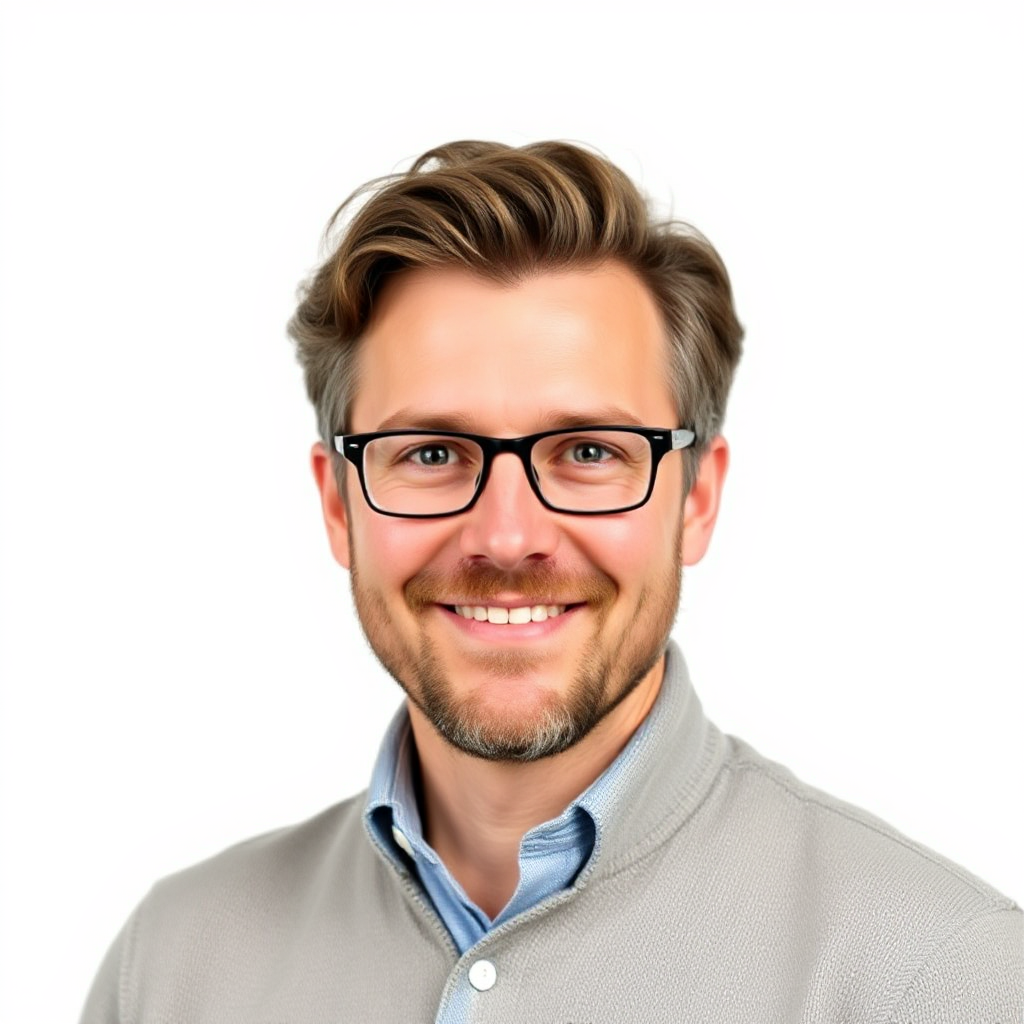

How does it feel to negotiate with Moscow's officials concerning the conflict in the region?
This inquiry has piqued widespread curiosity following several latest sessions of peace discussions, which have so far appeared to produce minimal progress half a decade after Russia's comprehensive military offensive.
Another phase of US-mediated discussions is expected to occur in the Swiss city later this week. Ahead of it, a key member of Ukrainian President Zelensky's delegation, Sergiy Kyslytsya, who has been involved in the latest direct military discussions, has shared his perspective.
According to the negotiator, these dealings are business-like and generally devoid of the sort of ideological and rhetorical posturing observed in other forums by Moscow.
"The military possess a superior understanding of what is going on in the combat zone," he stated during a meeting on Monday morning.
"The question remains if they [the Russians] are capable, or not, of reporting [back] directly…without altering or changing the information," he continued.
It is far from an simple thing to attempt to end a major conflict. The reality of the front line in eastern Ukraine - where tens of thousands of drones patrol and strike over a vast so-called "grey zone" between the two sides, while two hundred thousand local residents still reside in the "heavily fortified" urban areas of the eastern region - makes the practical business of disengagement extremely complicated.
"You have to establish a clear set of rules and procedures," Kyslytsya explained, "and a method to confirm and oversee."
The Involvement of International Parties
Much of this work, he said, is complete, partly due to the close participation of American representatives, including General Alexus Grynkewich and a high-ranking Army official.
It's obviously against Kyiv's interest to disparage representatives of the American government, but when he compliments the US delegation for its efforts, he sounds genuine.
"We have to credit the Americans for their commitment and their perseverance," he states, "because they sit in the sessions continuously. They don't only watch…they ask questions and they listen to our responses."
The negotiator was equally complimentary about the roles of Donald Trump's son-in-law, Jared Kushner, whom he described as "experienced", and wealthy envoy the special representative, whom he characterized as "far more astute person than the simplified image you see in the press".
The US, he asserted, will undertake a key role in monitoring any future ceasefire, with resources including orbital and other forms of high-tech monitoring.
"We need an entity who will serve as an arbitrator, for the reason that if there is a breach there should be a third party that is solid [and] authoritative."

Past and Current Oversight Realities
During an eight-year period before Russia's major invasion in recent years, this monitoring role was handled by the Organisation for Security and Cooperation in Europe - a group whose restricted resources and absence of enforcement mechanisms rendered it mostly incapable of averting an intensification.
"That was quite an achievement [for them] just to have a couple of drones airborne above the territory," Kyslytsya commented. "It resembles the Flintstones period compared to what we have today."
In comparison, recent reports indicate that as many as twelve thousand drones are active over the single city of Pokrovsk at any given moment.
A Personal Perspective on Facing the Adversary
Inquired how he managed to sit across the table from emissaries from a head of state in the Kremlin who has shown readiness to expend over a million of his own men to conquer Ukraine, the diplomat, with extensive UN experience, offered his response.
He explained that he'd had years of experience.
"I witnessed much worse. I spent five years in at the UN, three of them prior to the major war. I would be present with the adversary on a frequent basis."
A particular night is etched in his recollection: 23 February 2022.
During an emergency UN Security Council session, called to discuss the looming threat in the country, the ambassador received news that his homeland was being assaulted.
Simultaneously, far away to the east in the capital, the first far-off detonations signaled as the all-out attack on the nation began.
Amid scenes of agonising tension, the ambassador attempted to persuade Russia's ambassador, Vassily Nebenzia, to call his boss, the Russian foreign minister, to obtain assurances that Russian forces would not invade.
"I have stated everything I know today," Nebenzia replied, as recalled by his Ukrainian colleague. "I'm not going to disturb the minister at this hour."
The world changed at that instant. Kyslytsya stayed at the UN for an additional period prior to returning to Kyiv.
The Road Forward
Should the delegations reconvene in Switzerland this week, he'll be there, still thrashing out the contours and mechanics of a ceasefire but anticipating continuously for the most important part of the puzzle to be resolved.
"The war could be ended by just a single order of an individual to his military chief of staff," he said.
"But apparently, the Russian president [Vladimir Putin] is not prepared for ending the war at present."


